Depop Fit Confidence
The "Depop cinch" fakes a smaller waist than a garment actually has, and sizing is often buried in free text or missing entirely. I designed a fit-confidence system so buyers can trust what they're buying before sales-final purchase.
Sizing measurements are often buried in free-text descriptions, inconsistent, or missing entirely — and vintage sizing frequently doesn't match modern sizing anyway. Sales are final, so buyers can't reliably tell how an item will fit, which costs both buyers (regret purchases, hesitation to buy at all) and sellers (lost sales, disputes) confidence in the platform.
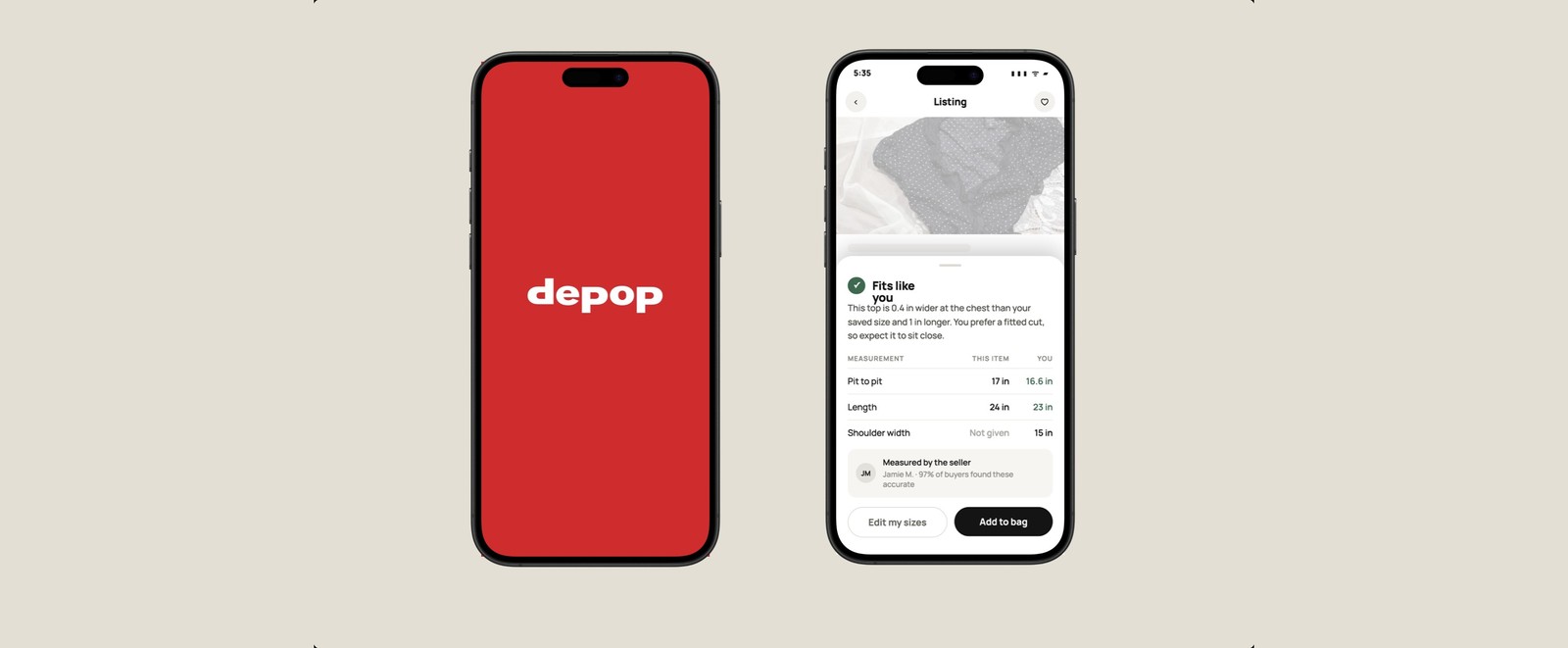
I designed a "fit confidence" system with three parts: a standardized measurement input for sellers with structured fields and guided photo prompts, a "fits like" comparison tool for buyers that checks listings against their saved measurements, and a trust signal surfaced directly on the listing card — not buried in the description.
I framed the core problem as:
- I noticed this through my own experience using Depop. I ran into this friction repeatedly while shopping, but assumed it was just my own bad luck, and it eventually discouraged me from using the app for a while.
- I later came across a TikTok poking fun at the "cinch" trend. Reading through the comments, I realized the frustration was widely shared, not just my own experience.
Three real listings show the pattern clearly.
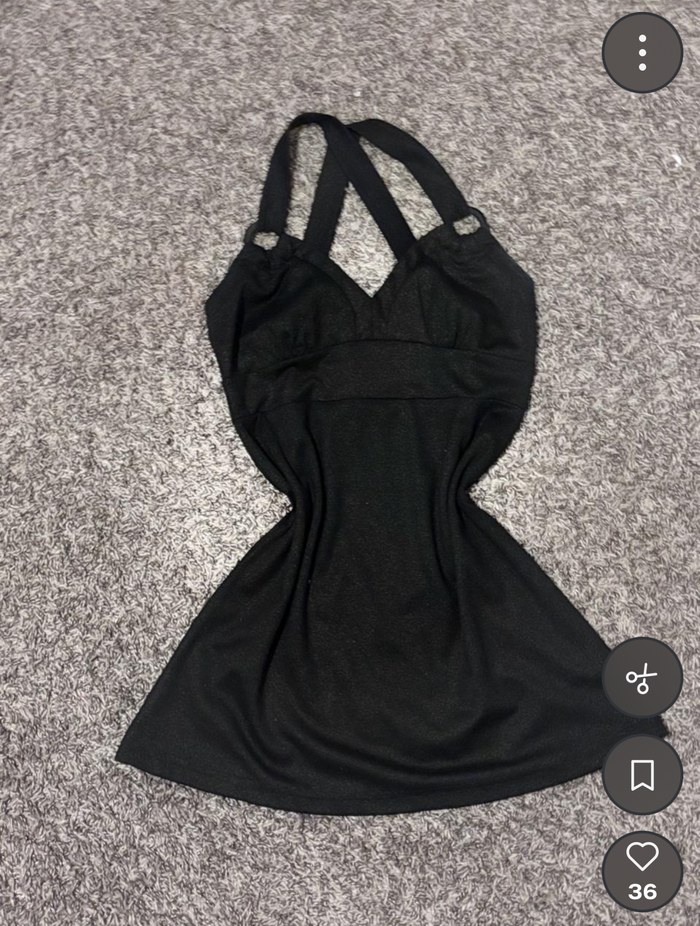
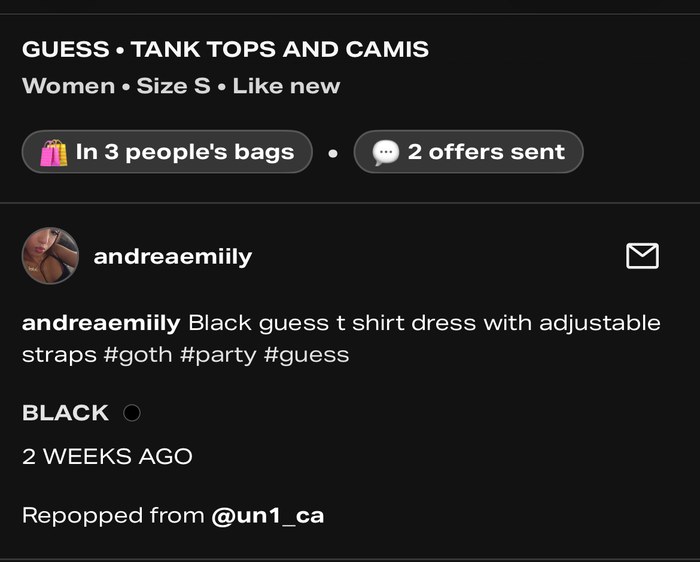
Cinching unnatural to how the shirt actually flows; no measurements listed, only one photo of the item.
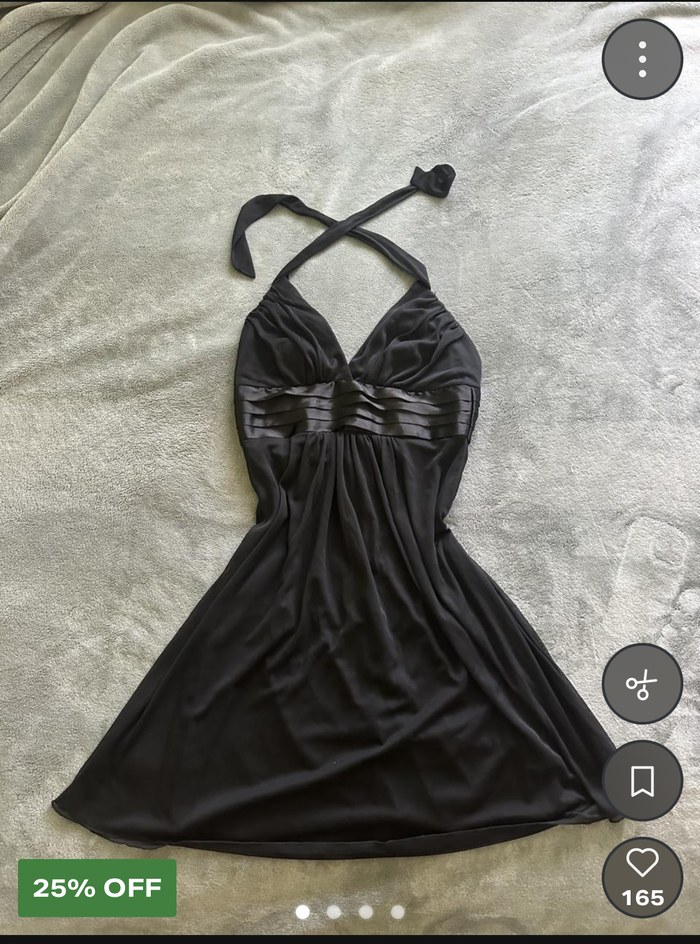
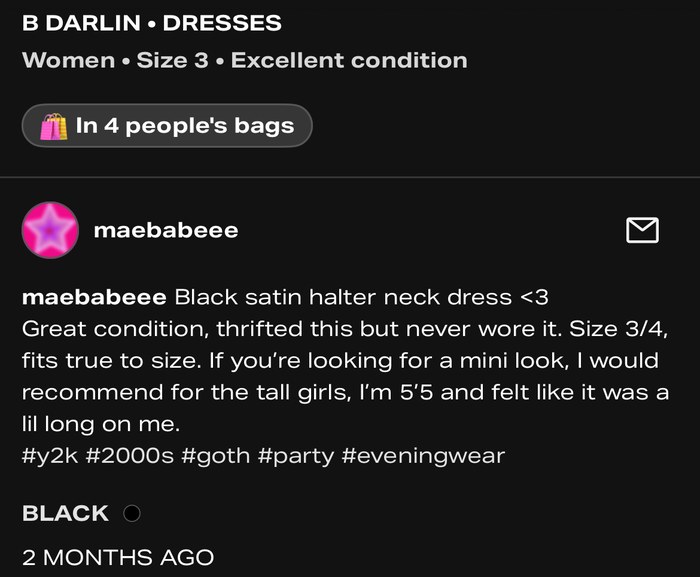
Description is written around how the item fits a specific height; sizing is inconsistent between the post (labeled a size 3) and the free-text description (labeled 3/4).
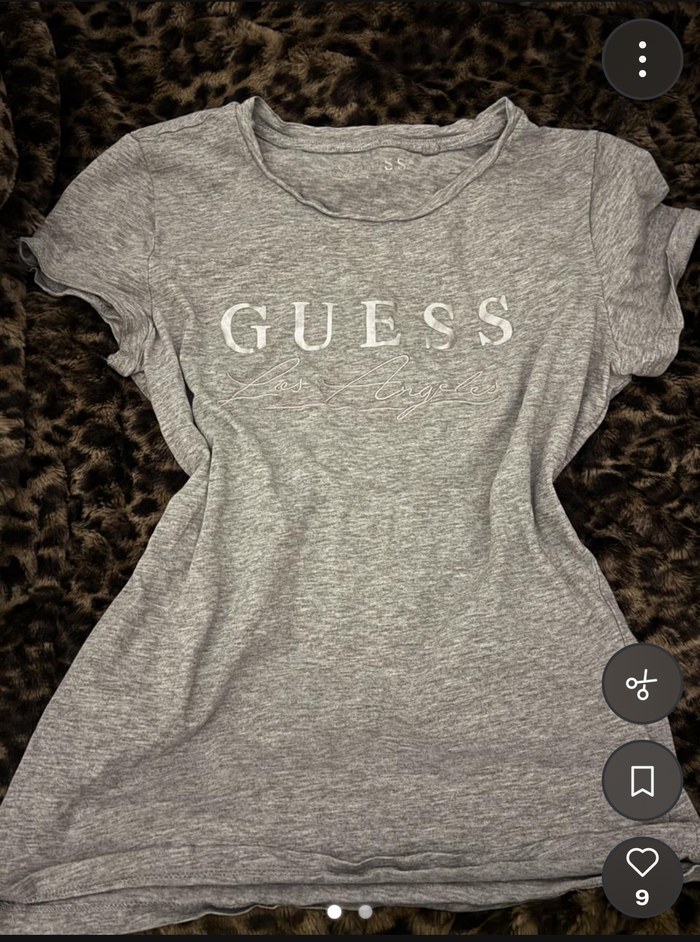
Unnatural cinching not at the natural waistline; no measurements provided.
Reactions gathered from Reddit threads on the cinching trend sorted into two clusters: fit can't be judged, and trust & platform pressure.
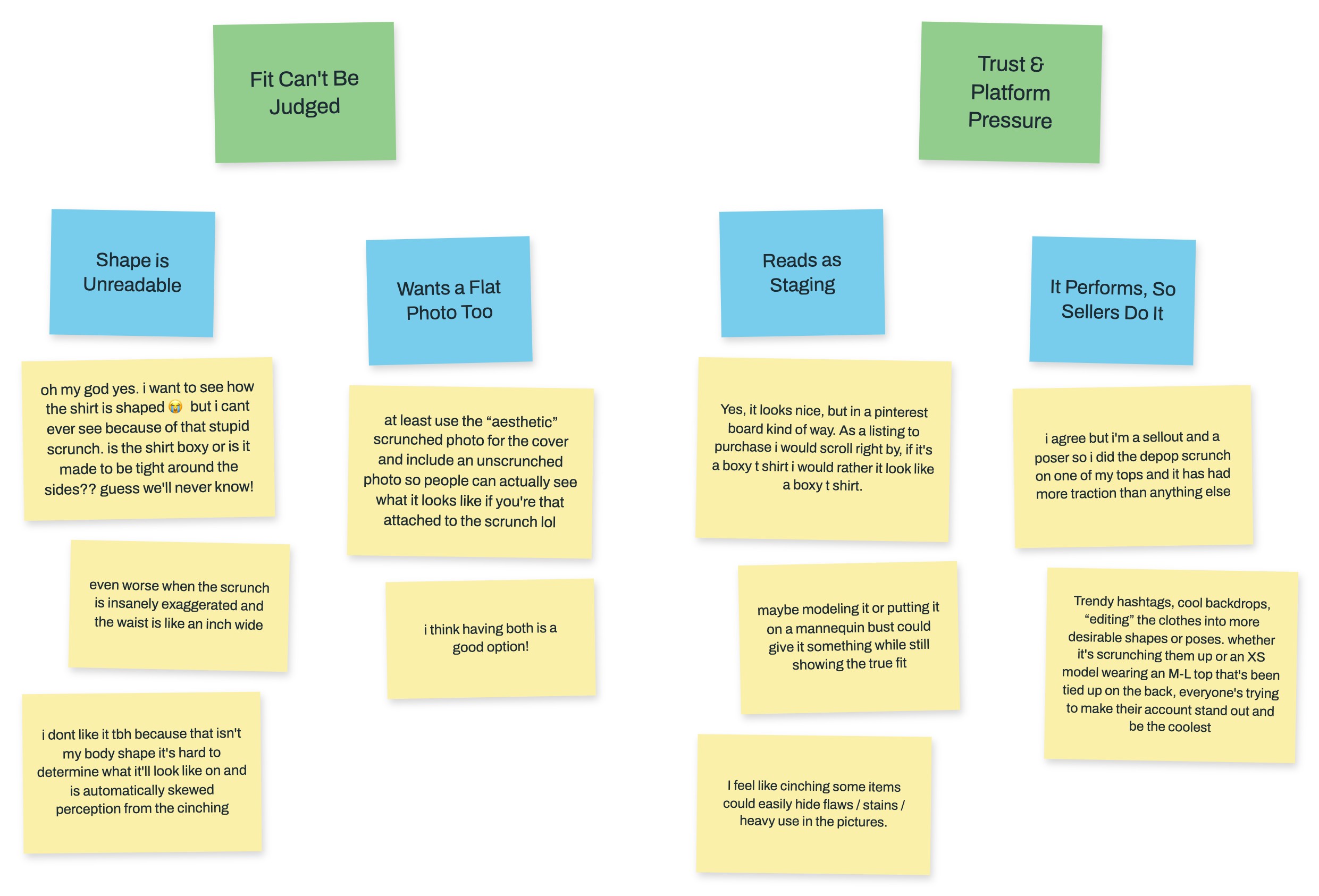
- Cinching persists because it works. Buyers engage more with styled, cinched photos, and sellers have noticed listings gain more traction when styled this way compared to flat photos. This creates an incentive to keep using a technique that actively works against buyer trust.
- There's no standardized, required way to communicate fit. Measurements are optional, free-text, and inconsistently labeled, so even well-intentioned sellers produce listings buyers can't reliably interpret. Over time, buyers either disengage from measurements entirely (treating purchases as a gamble) or abandon purchases they'd otherwise want to make.
- Lose confidence in purchasing because they can't reliably predict fit, leading to both regretted purchases and abandoned ones.
- Face a dilemma between using a technique that drives engagement (cinching) and one that builds buyer trust (flat, accurate photos and measurements) — and currently have no structured way to do both well.
Whether sellers continue to use cinched or styled photos. That's a valid creative and marketing choice, and the data shows it genuinely drives engagement, so I'm not trying to eliminate it — the goal is ensuring accurate fit information exists alongside it, not replacing it.
- Standardized measurement input for sellers — structured fields (not free text) with guided photo prompts (flat, on-body, tag). Lives on the "list an item" page under item info; could be optional but strongly incentivized.
- "Fits like" comparison tool for buyers — buyers save their own measurements under a personalization/sizes setting, and every listing can be checked against them.
- Trust signal on the listing card itself — visible in the scroll/grid view, not buried in the description; can be toggled on or off.
Click through the hi-fi screens — each slide carries callouts on the key design decisions behind it.
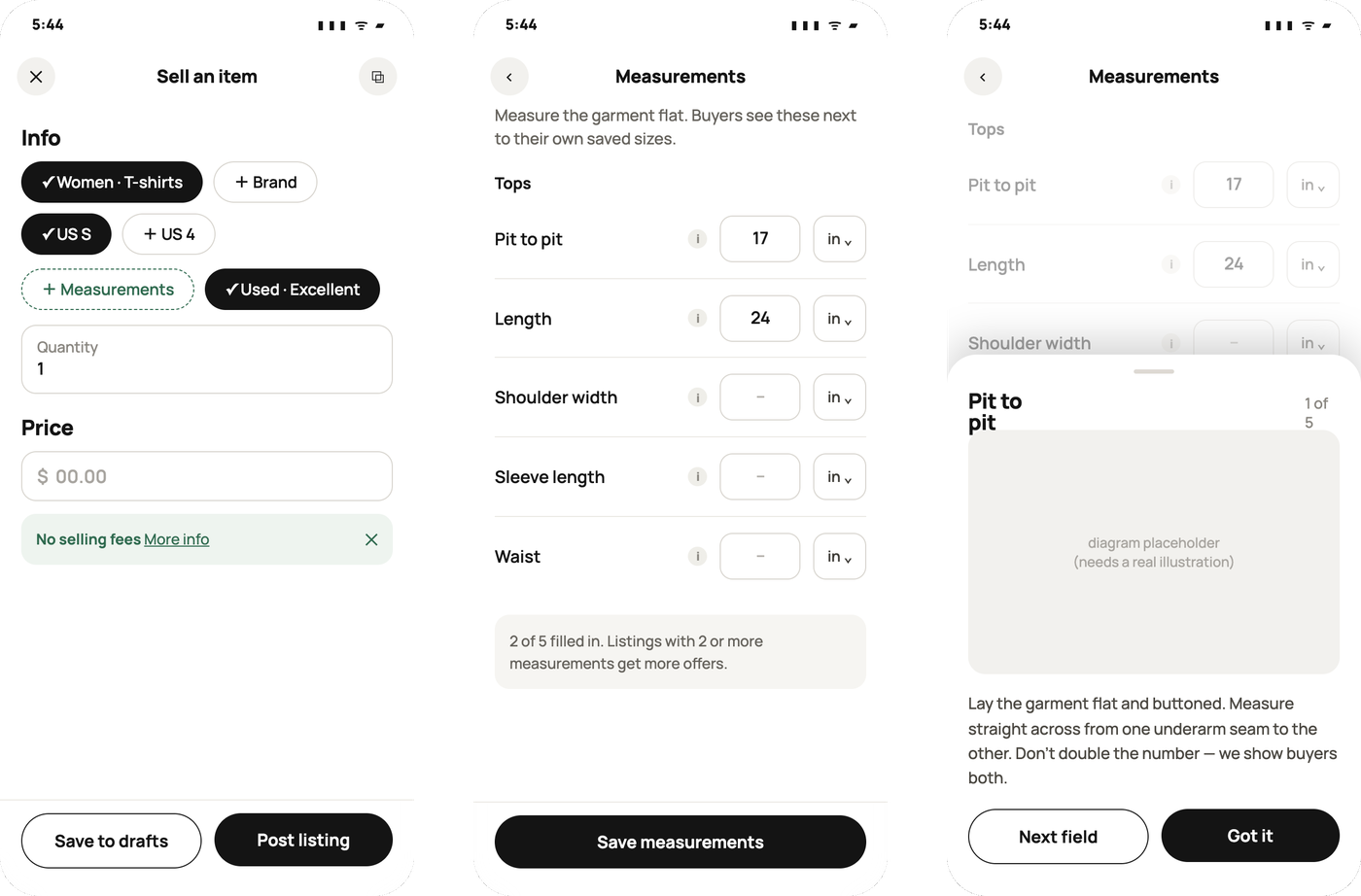
Depop's "sell an item" flow already renders a different size-input template depending on category (shirts vs. shoes vs. accessories). I extended that same pattern for measurements — fields need to be required for the system to work, but a required "waist" field makes no sense for someone selling a bag.
Making key fields required, paired with guided measurement diagrams (showing sellers exactly where to measure), is the strongest fix — stronger than just adding more fields.
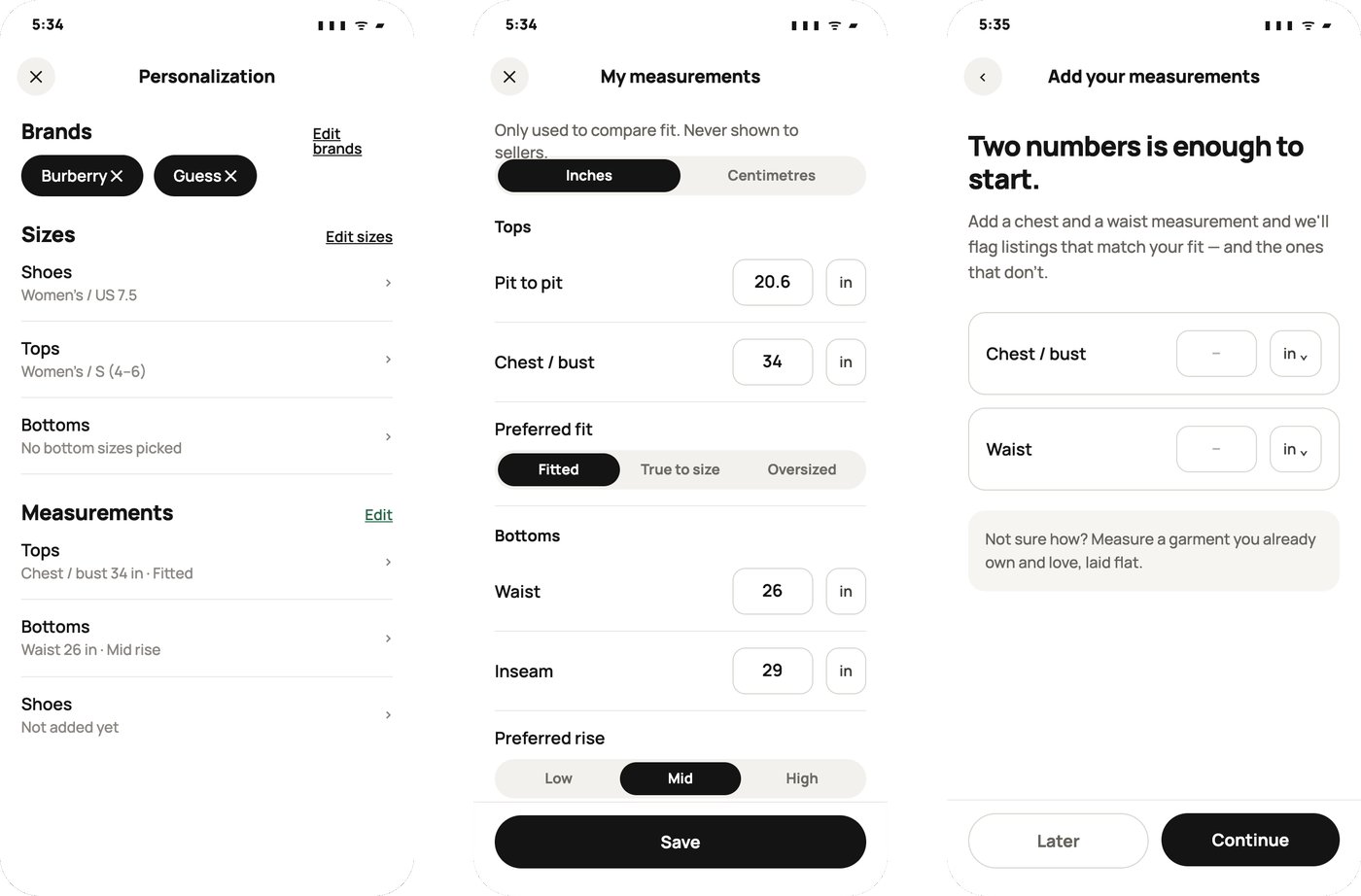
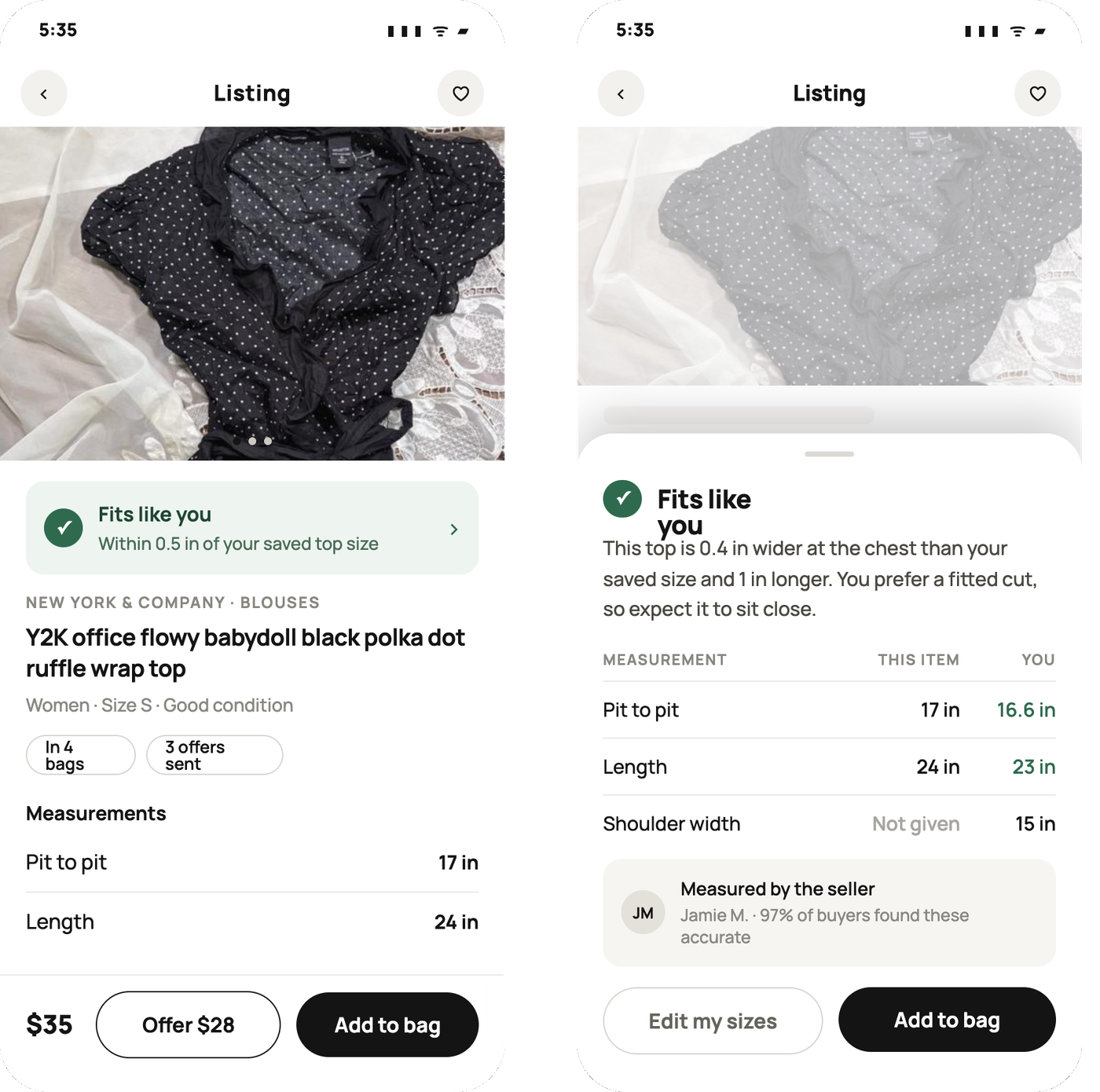
A percentage score can feel gimmicky unless it's backed by real data; "fits like" feels grounded in the buyer's own input instead of an opaque algorithm.
- Fits like you — measurements match the buyer's saved profile within a reasonable tolerance; the primary trust signal.
- Runs bigger — a graduated variant rather than a flat pass/fail; tells the buyer to size down or check details before buying.
- Add sizes — shown when the buyer hasn't saved measurements yet; doubles as a CTA nudging them to complete their profile.
- No measurements — shown when the seller never filled in structured data; a visual penalty for unverified listings.