HomeSafe — Ride Coordination App
HomeSafe is a ride-coordination app that helps Columbia & Barnard students find a travel buddy after a night out — splitting the cost of an Uber and making sure no one heads home alone, especially late at night.
An Uber back to Morningside Heights from the Lower East Side or Brooklyn can run $40–$70, and the subway, while cheap, can feel unsafe late at night — especially for someone traveling alone, intoxicated, or in revealing clothing.
HomeSafe connects students who are heading toward the same place at the same time so they can split an Uber or ride the train back together, turning a stressful, expensive solo trip into a shared, affordable, and safer one.
Our primary users are students at Columbia and Barnard who frequent bars and clubs downtown; the app also serves the wider student body for shared rides to airports, concerts, and other off-campus destinations. We shadowed and interviewed students on real nights out — at jazz bars in the Lower East Side, clubs in Queens, and on the walk back to campus — then ran an affinity diagramming session to find patterns across everything we'd heard.
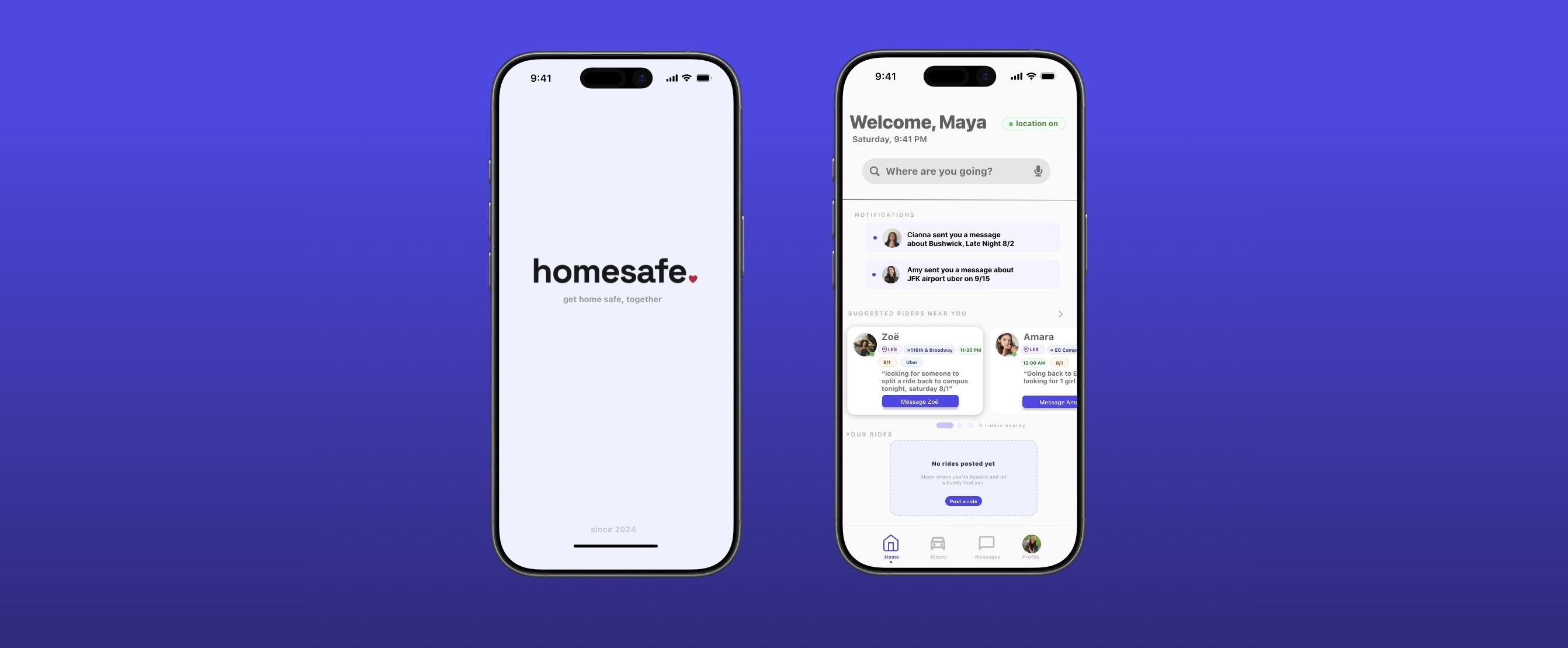
A walkthrough of the hi-fi prototype in action.
We grouped everything we heard into an affinity diagram, which sorted into two clear clusters: personal safety concerns and financial & logistical constraints.
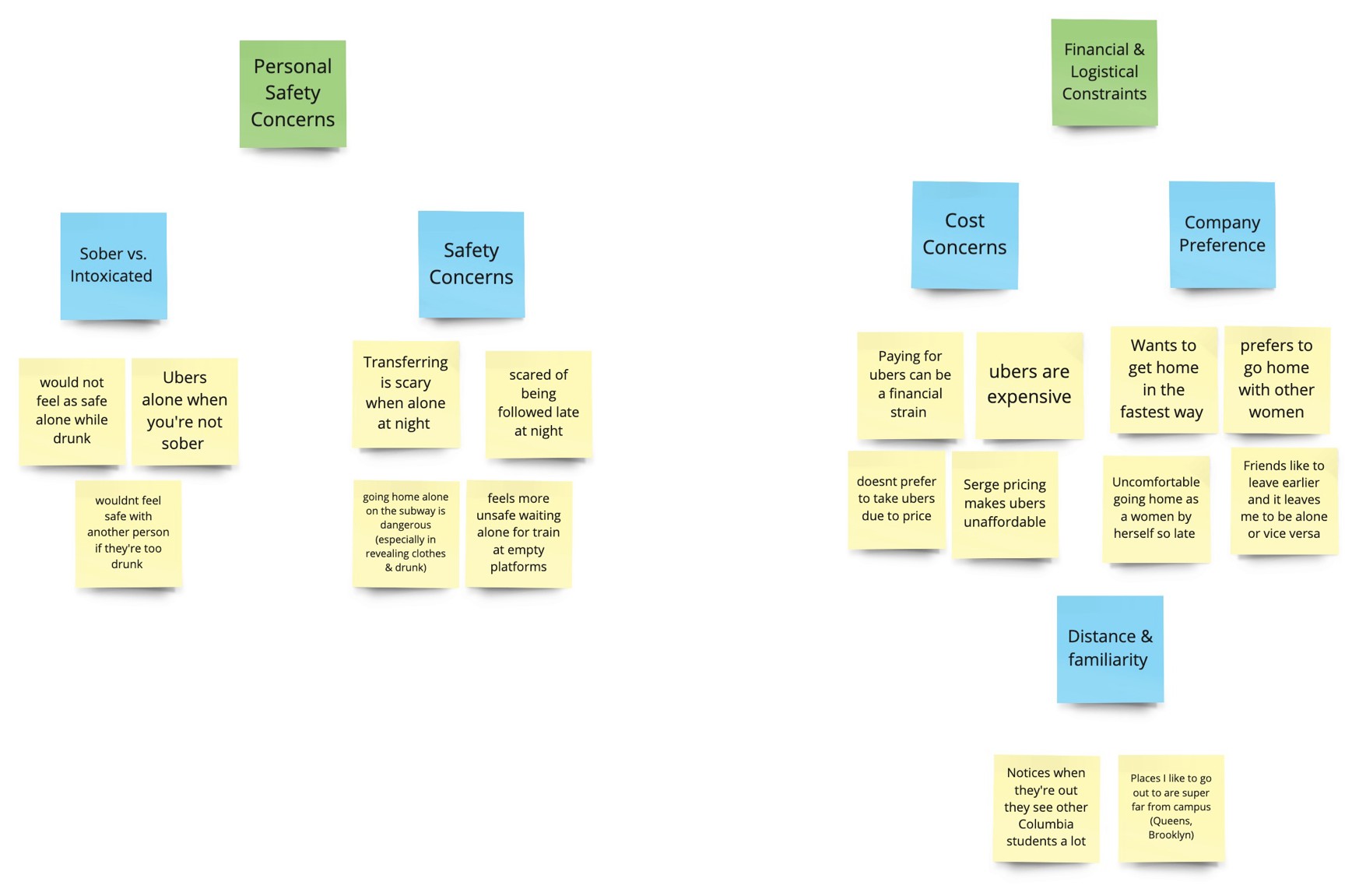
- Traveling alone late at night feels far less safe than with company — especially while intoxicated.
- Transferring trains alone, or waiting on empty platforms, was repeatedly described as scary.
- Revealing clothing after a night out heightened feelings of vulnerability on transit.
- Many students said they'd rather wait and leave with another woman than go alone, sober or not.
- Ubers from popular nightlife areas (Brooklyn, Queens, downtown) are a real financial strain.
- Surge pricing pushes prices well past what students consider affordable.
- Students consistently said they'd prefer to go home with other women if given the option.
- Friends often leave at different times, leaving someone to figure out the trip home solo.
Two services already address pieces of this puzzle — but each leaves a gap that HomeSafe was designed to fill.
Splits fares with a stranger heading the same direction — but the savings are often marginal. A shared ride from Morningside Heights to the Upper East Side was $17.52 versus $21.94 for a private UberX, a difference of just a few dollars.
Free rides within a campus radius, but waits often exceed 20 minutes, service runs only 6pm–3am, and it never reaches downtown Manhattan, Queens, or Brooklyn — exactly where our users are going out.
Combines the cost-sharing of Uber Share with the safety and community of the Evening Shuttle. Students coordinate with people already heading their way — no time window, no service-area limit, and a shorter wait than a scheduled shuttle since it's an on-demand car.
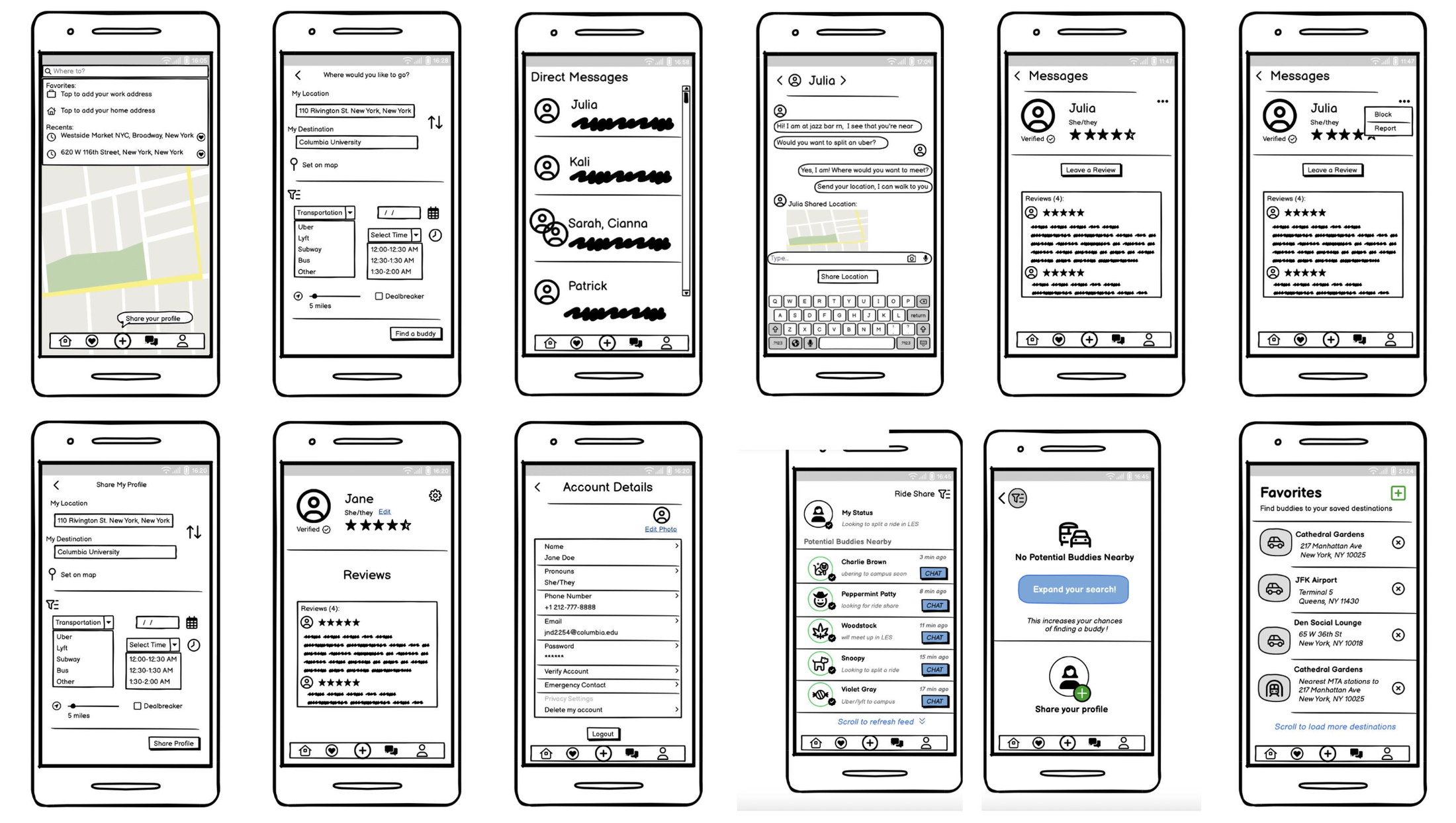
Balsamiq wireframes covering the full flow — destination search with buddy filters, the potential-buddy feed, direct messages, reviews and verification, profile sharing, account settings, and saved destinations.
Four core flows, built in Figma: onboarding and .edu verification, posting a ride, the rider home feed, and the profile other students see.
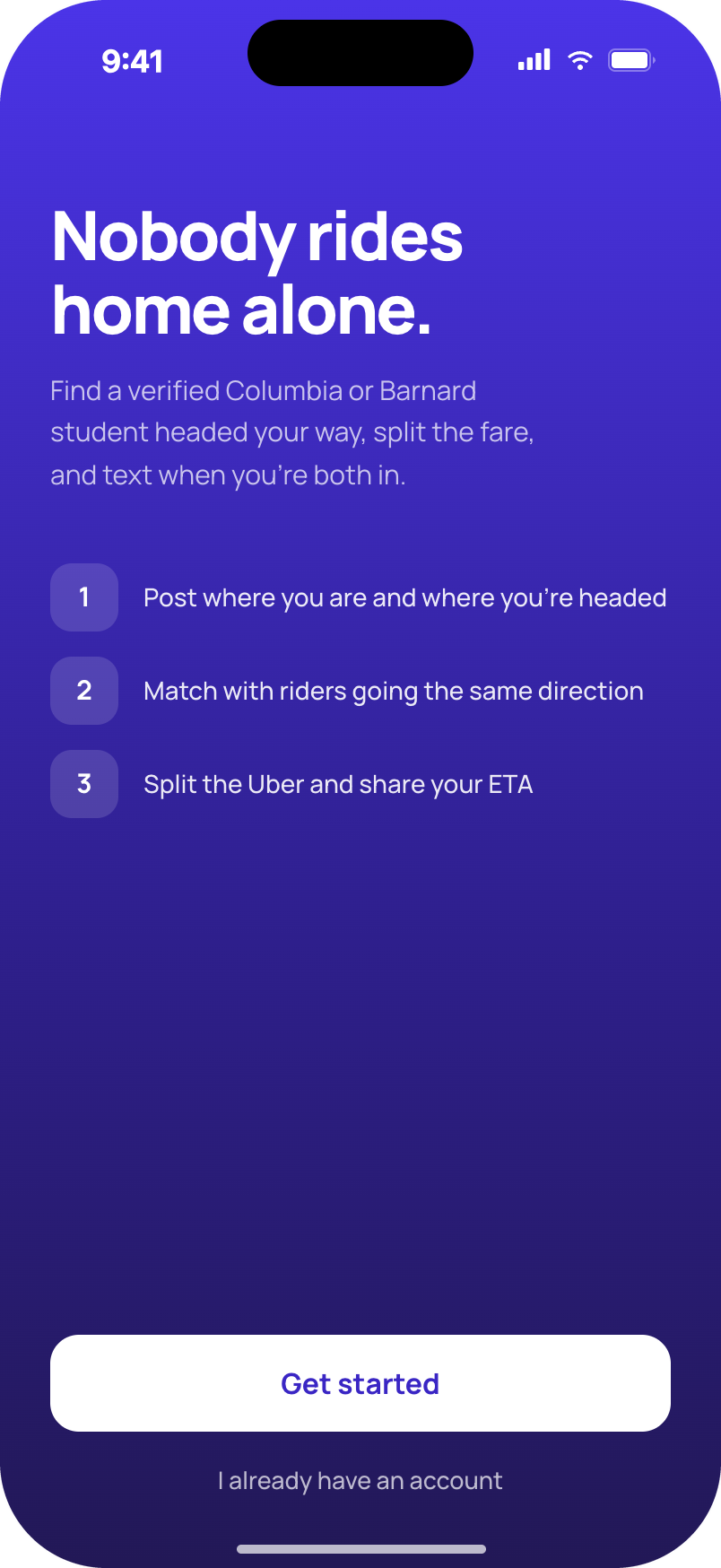
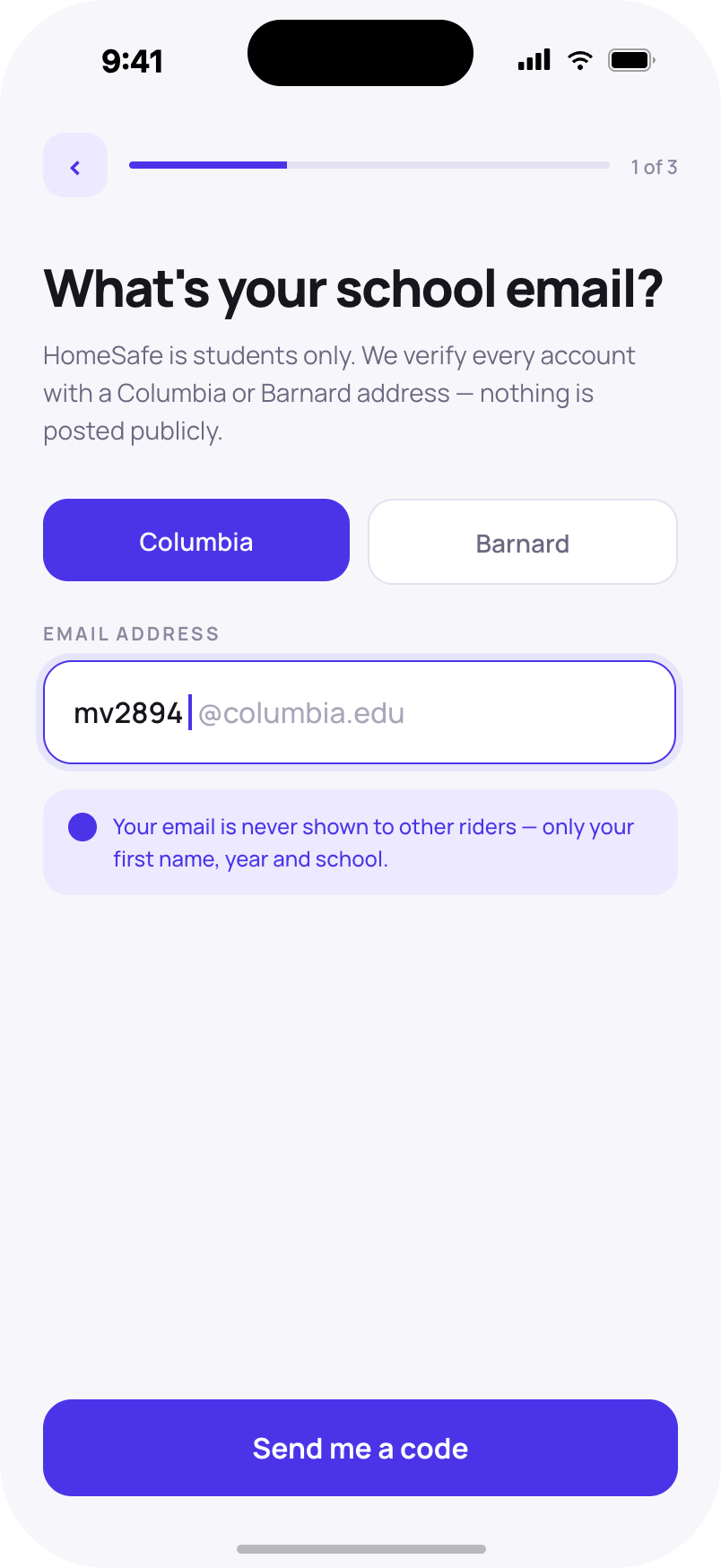
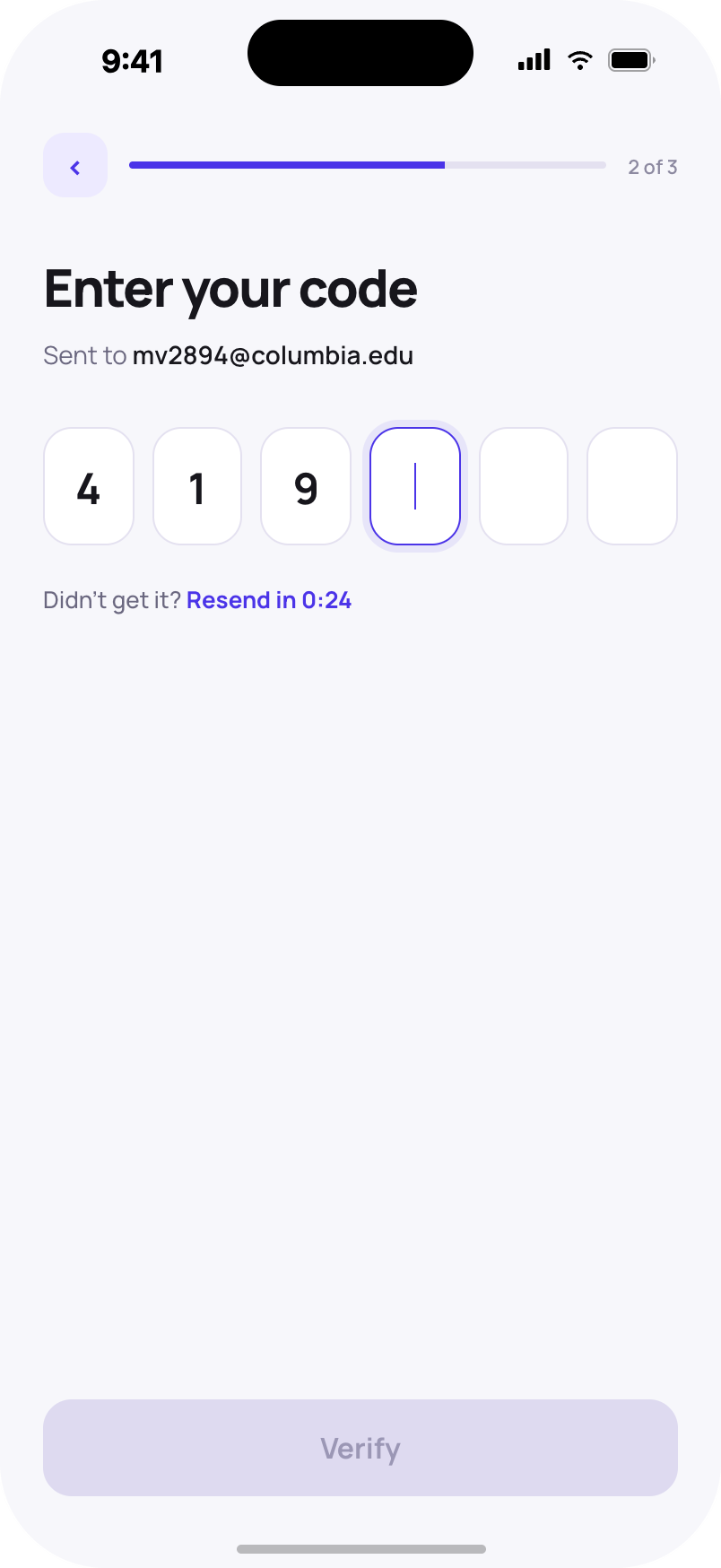
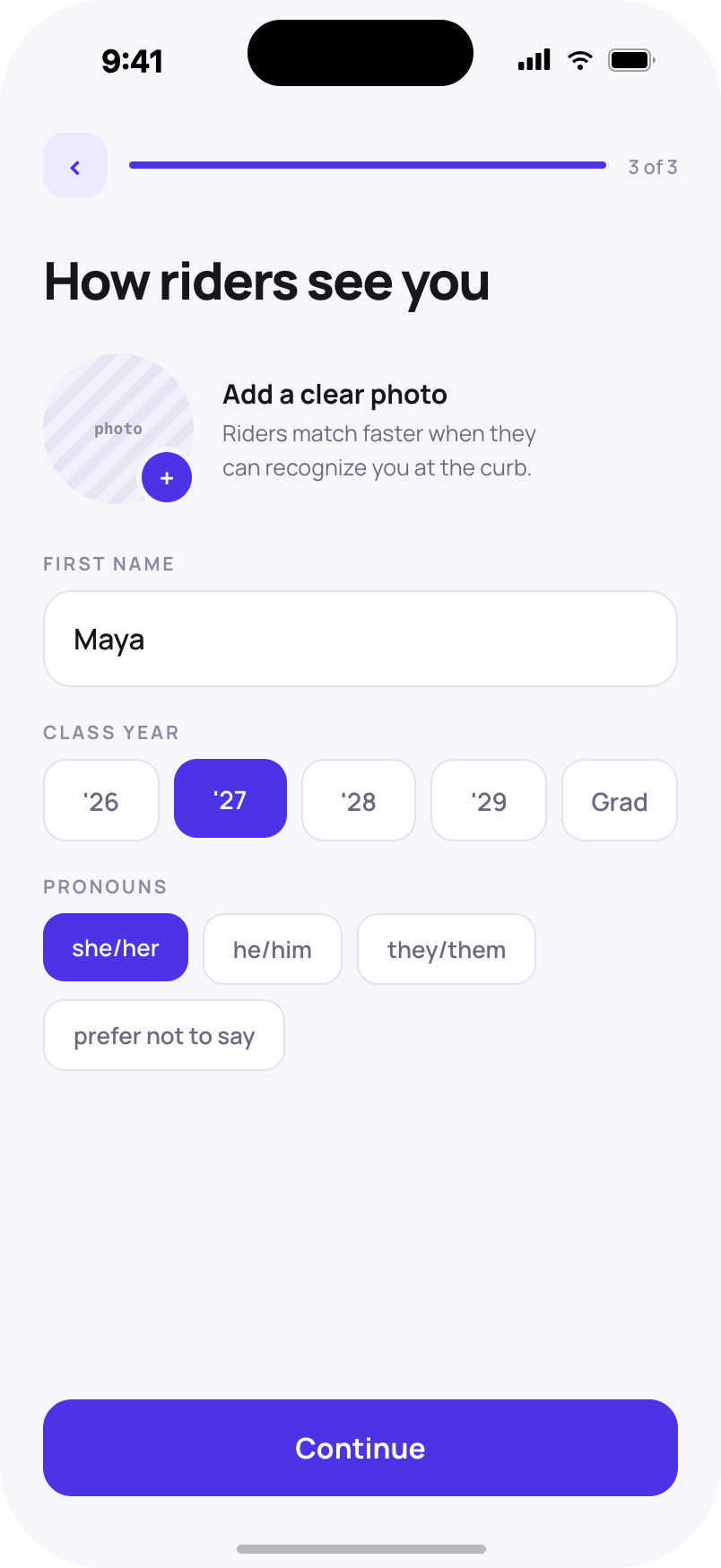
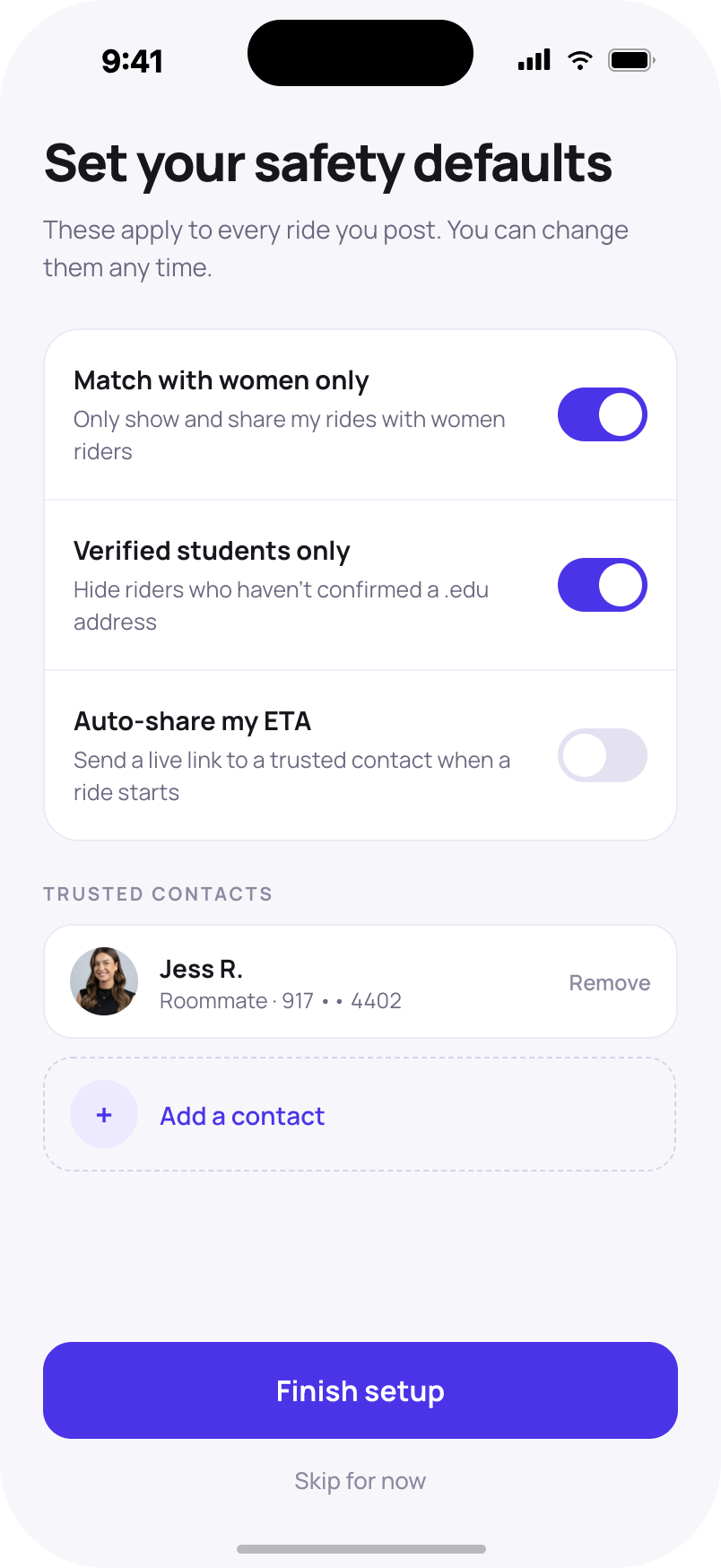
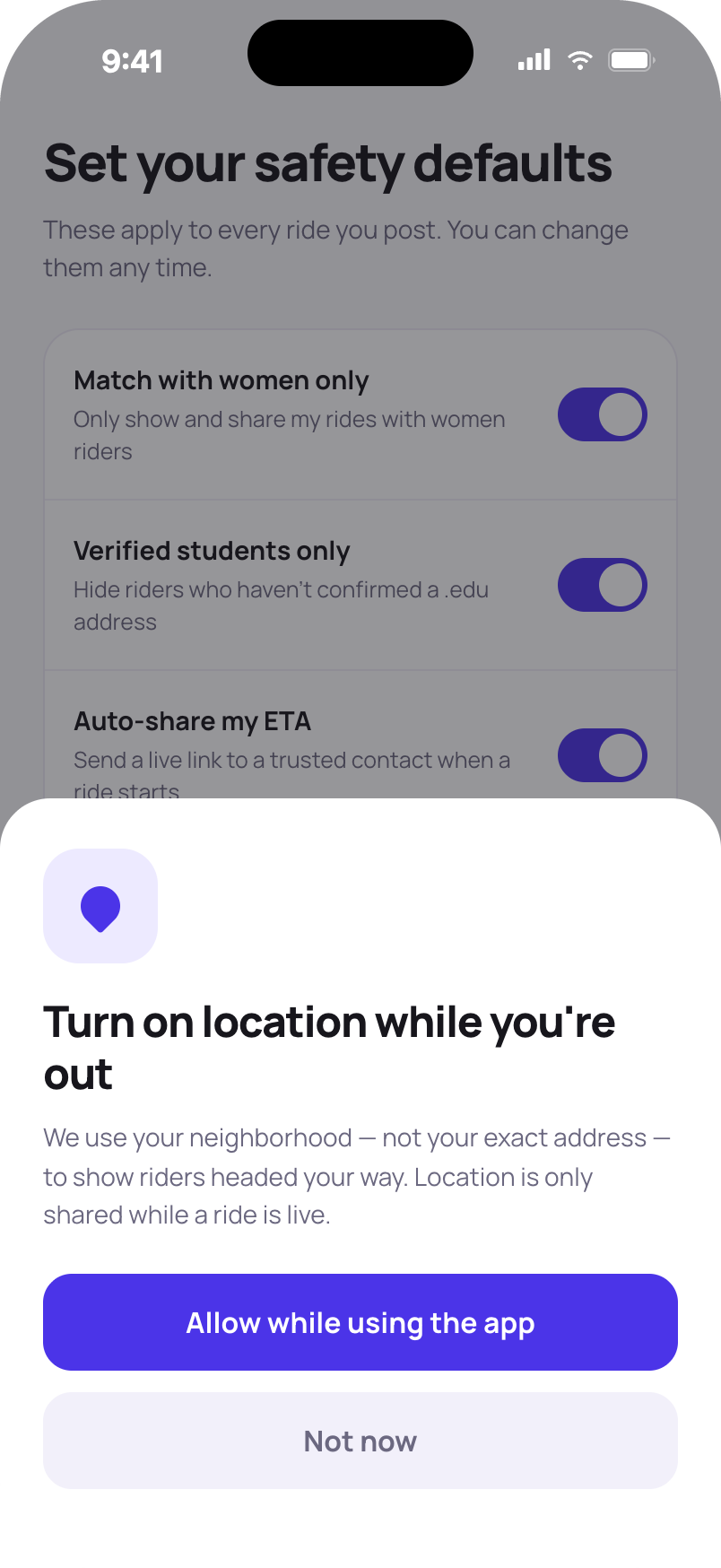
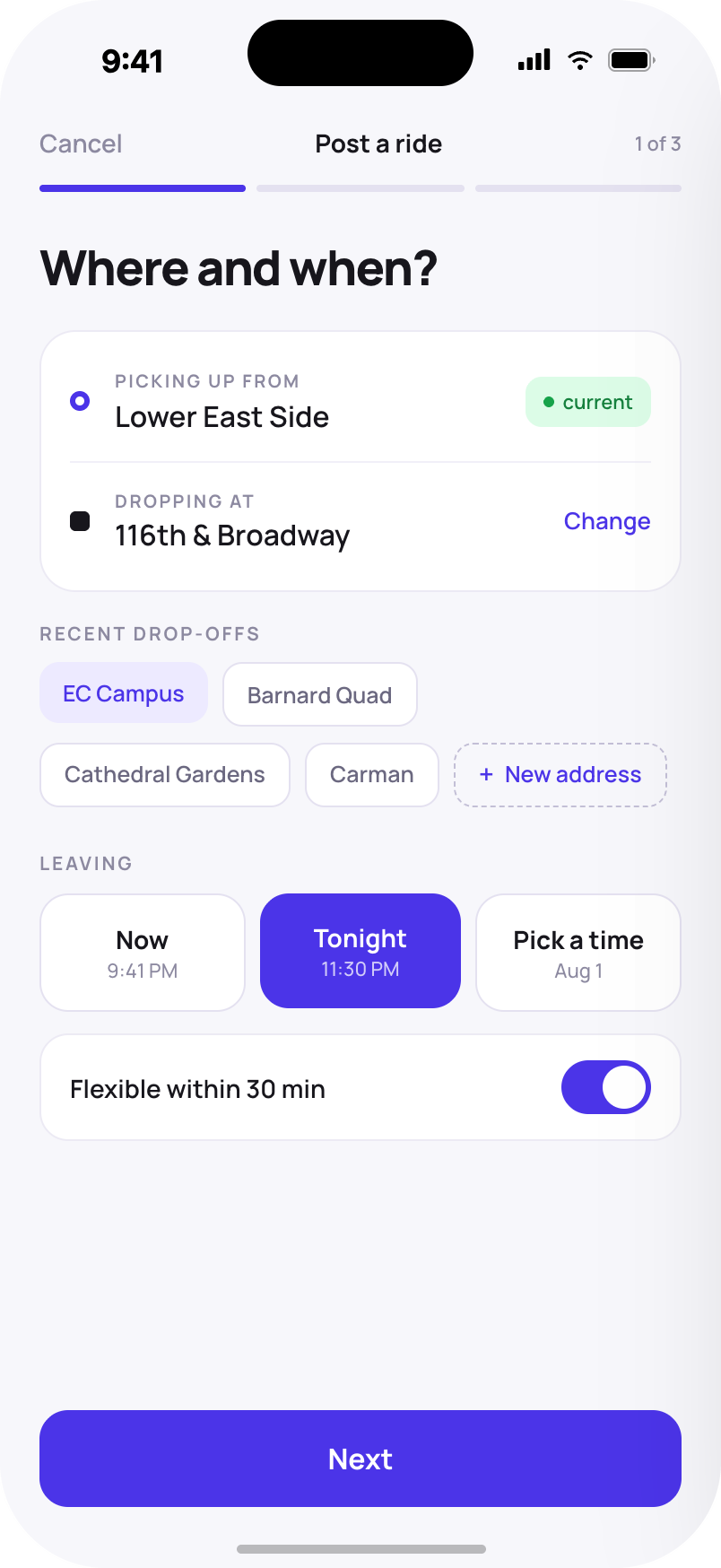
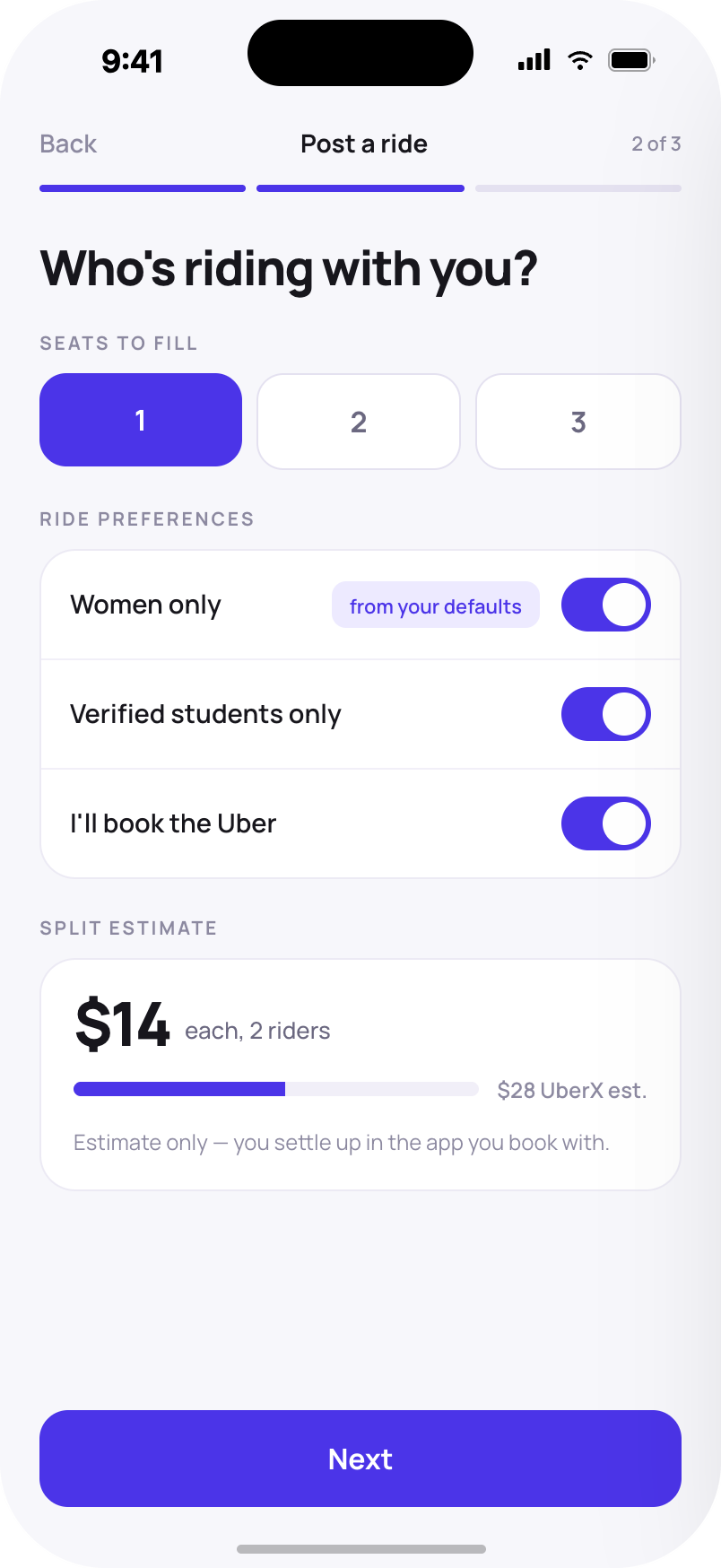
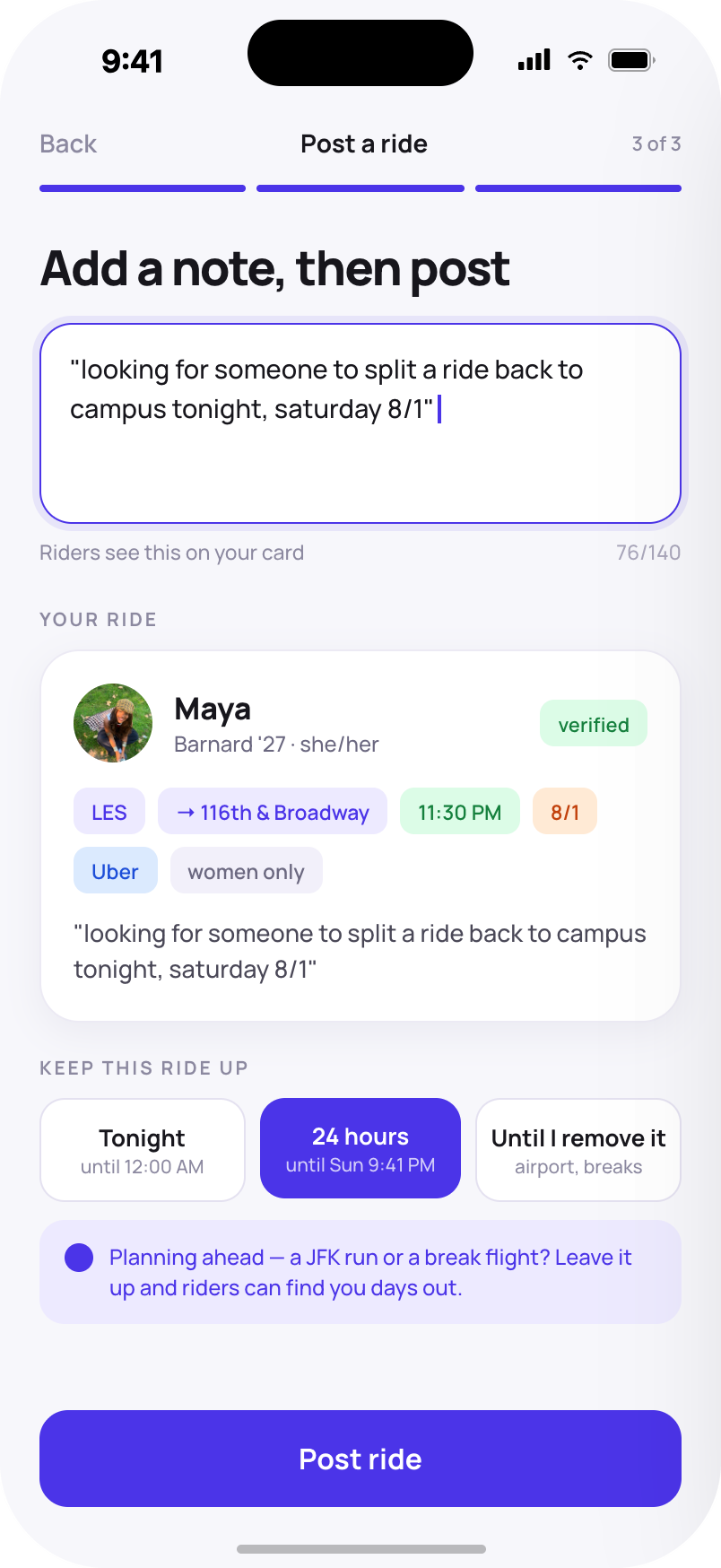
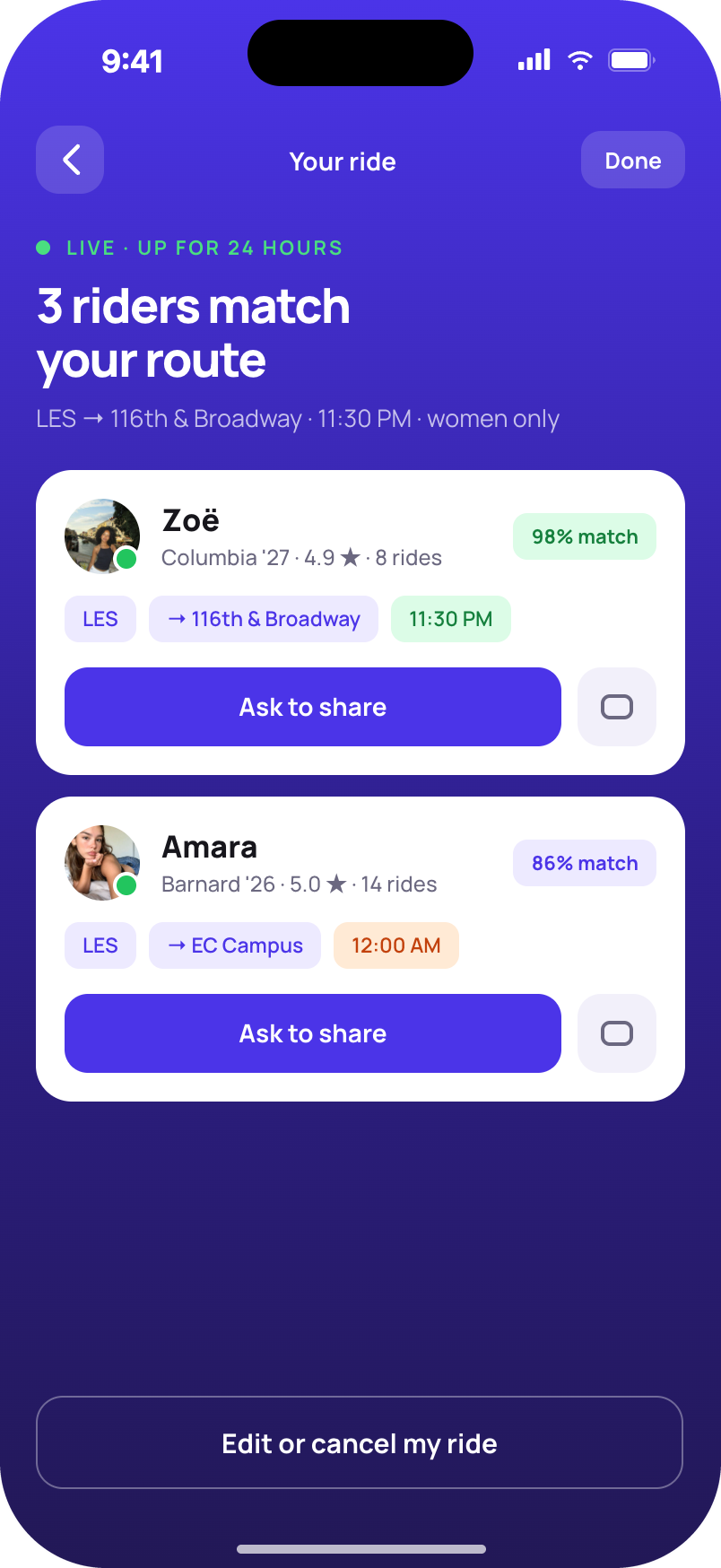
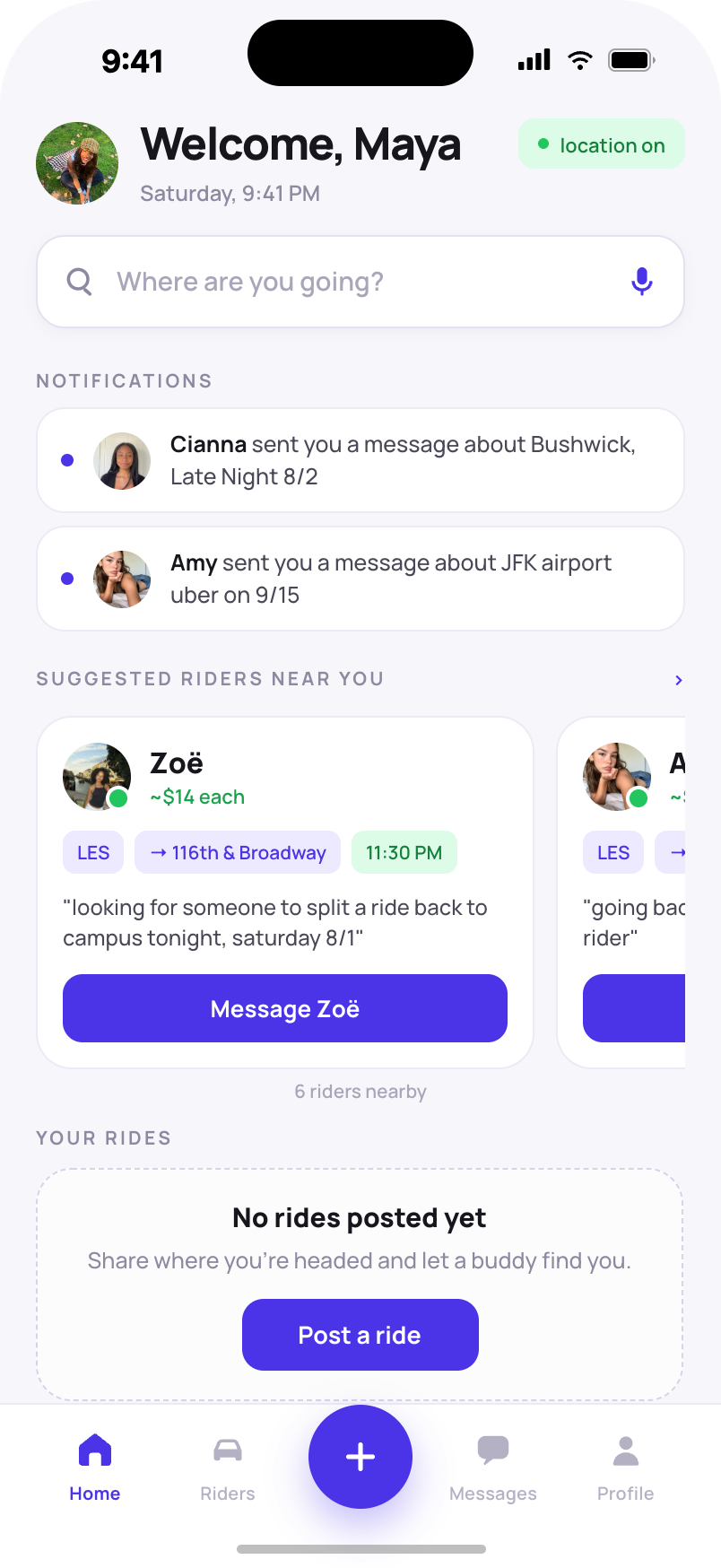
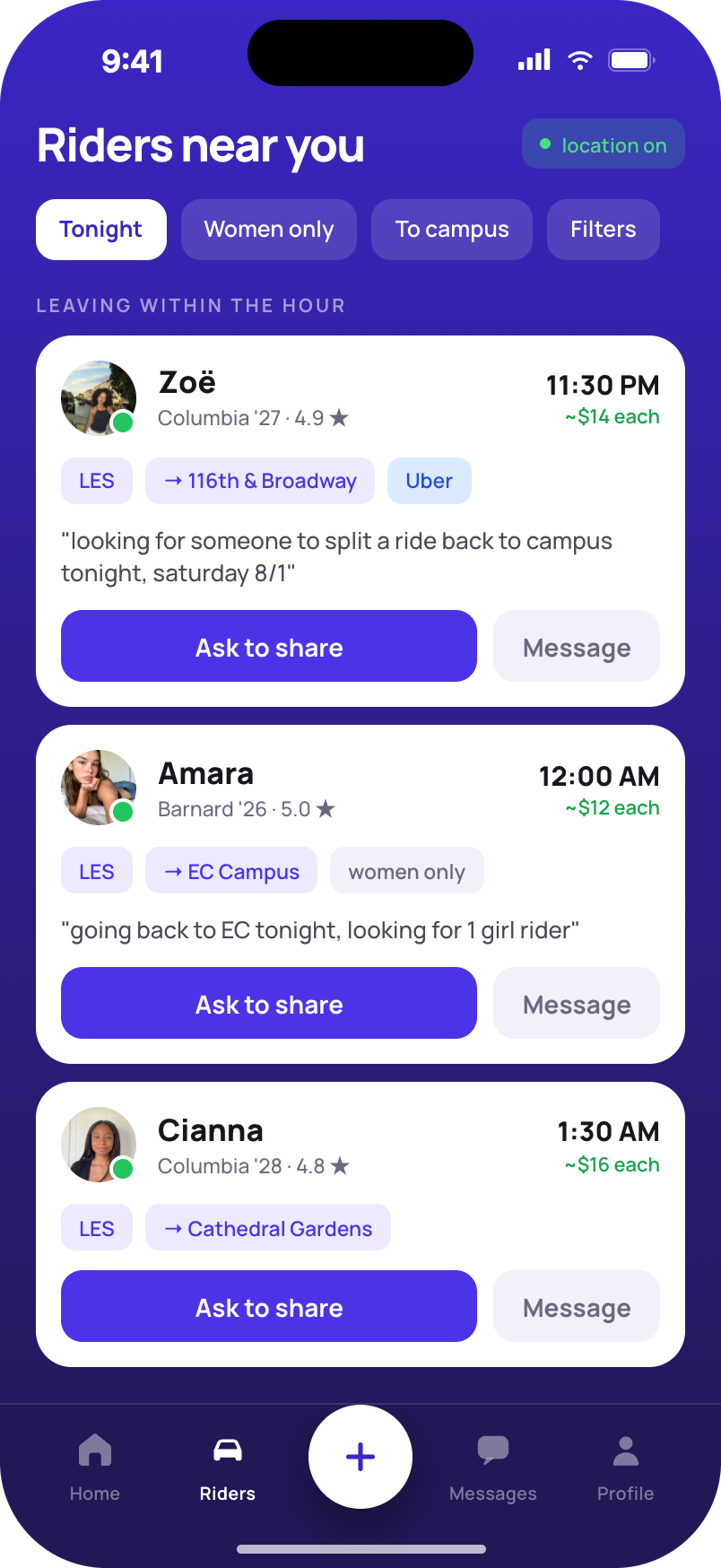
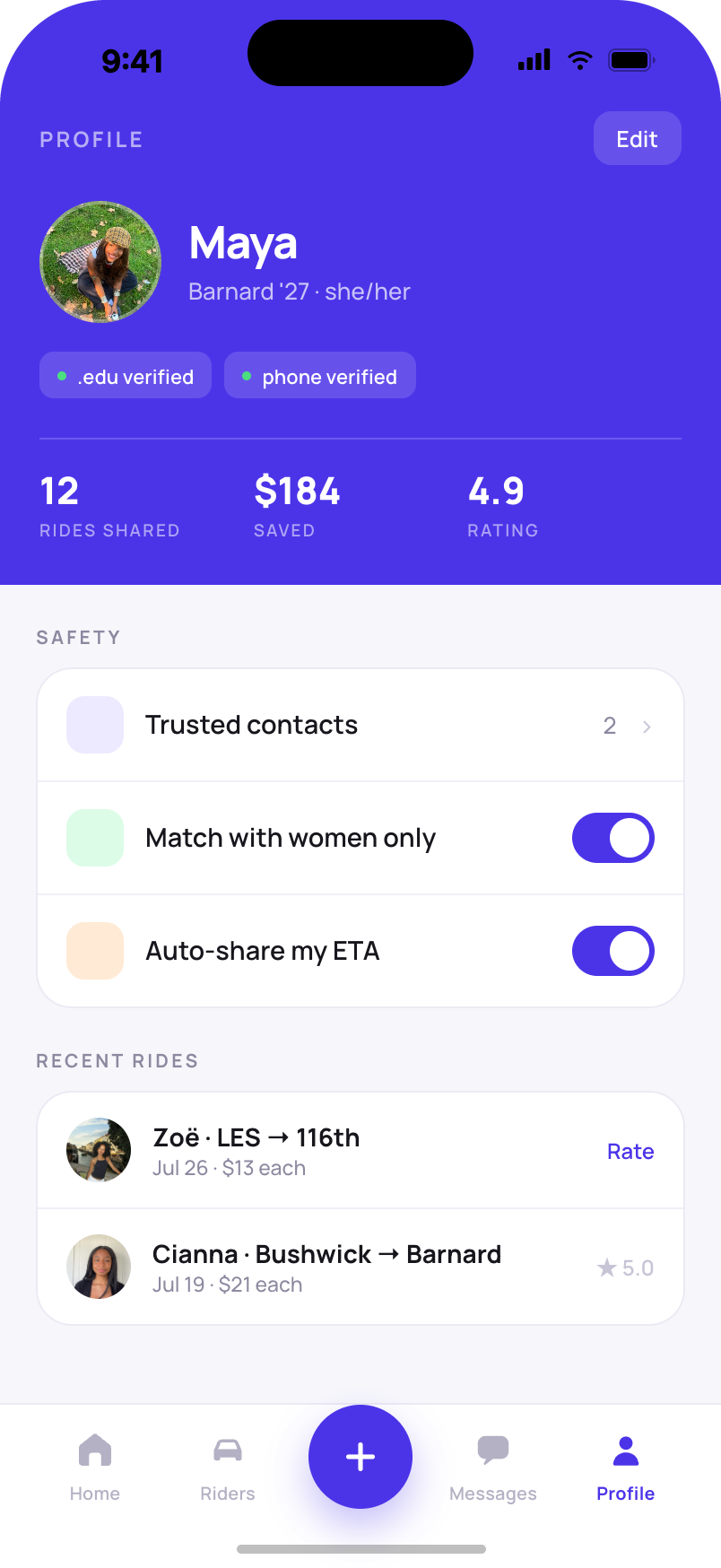
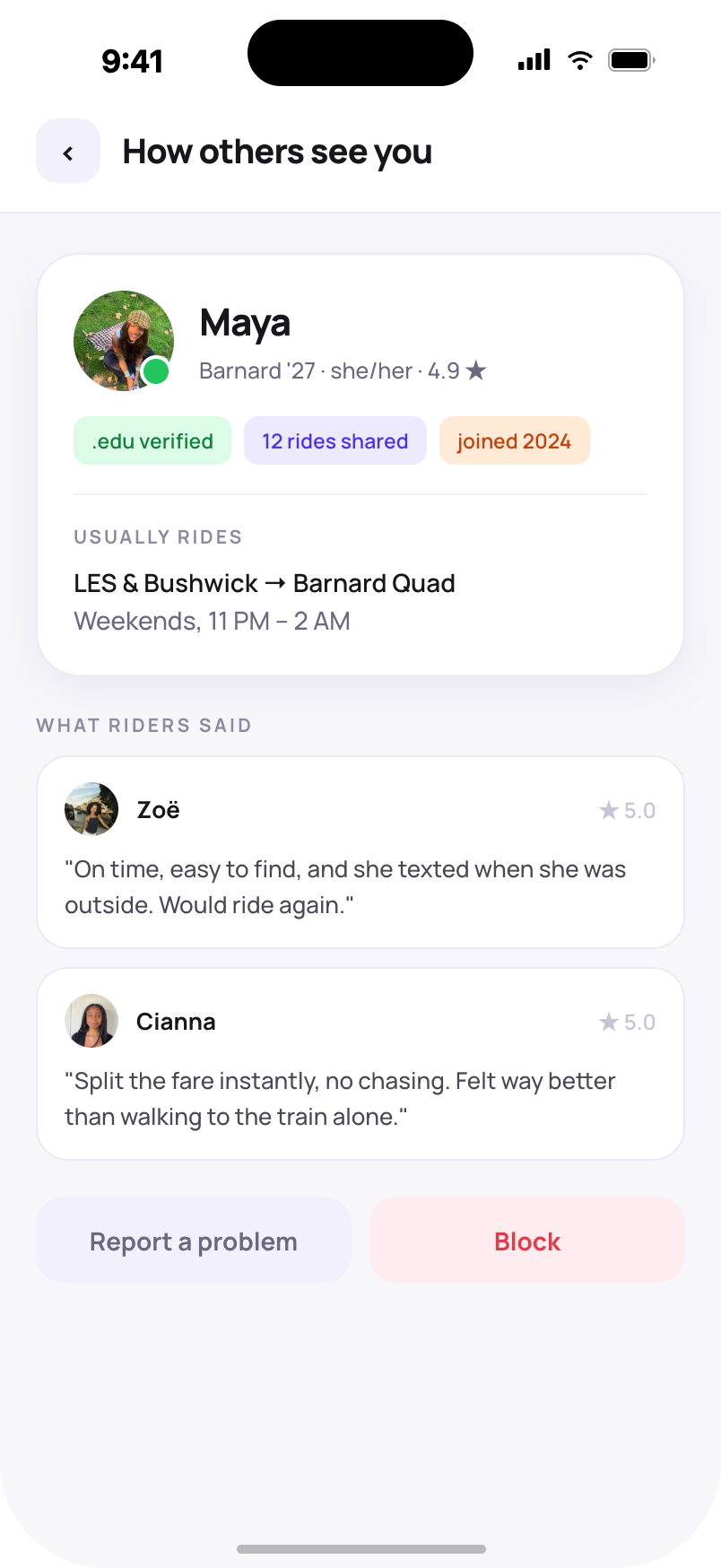
Our design hypothesis: a platform like HomeSafe would provide a reliable, cost-effective way to get home safely, reducing the cost of expensive Uber rides. Our small-scale prototype test supported that — but also surfaced real open questions.
- The group-chat format felt natural and unforced — participants used it without prompting once it was time to leave.
- Splitting a $57 taxi from Queens down to $14.25 per person validated the core value proposition.
- Ranking-driven wireframes made the jump to a polished hi-fi prototype much faster.
- How do we build critical mass — and promote the app — without a large existing user base?
- Would users feel comfortable sharing real-time location at scale, beyond a small trusted group?
- How should the UI feel less like "messaging strangers" and more like the original group chat?
- What's the right way to incentivize early prototype testers given limited go-out windows (Thu–Sun)?